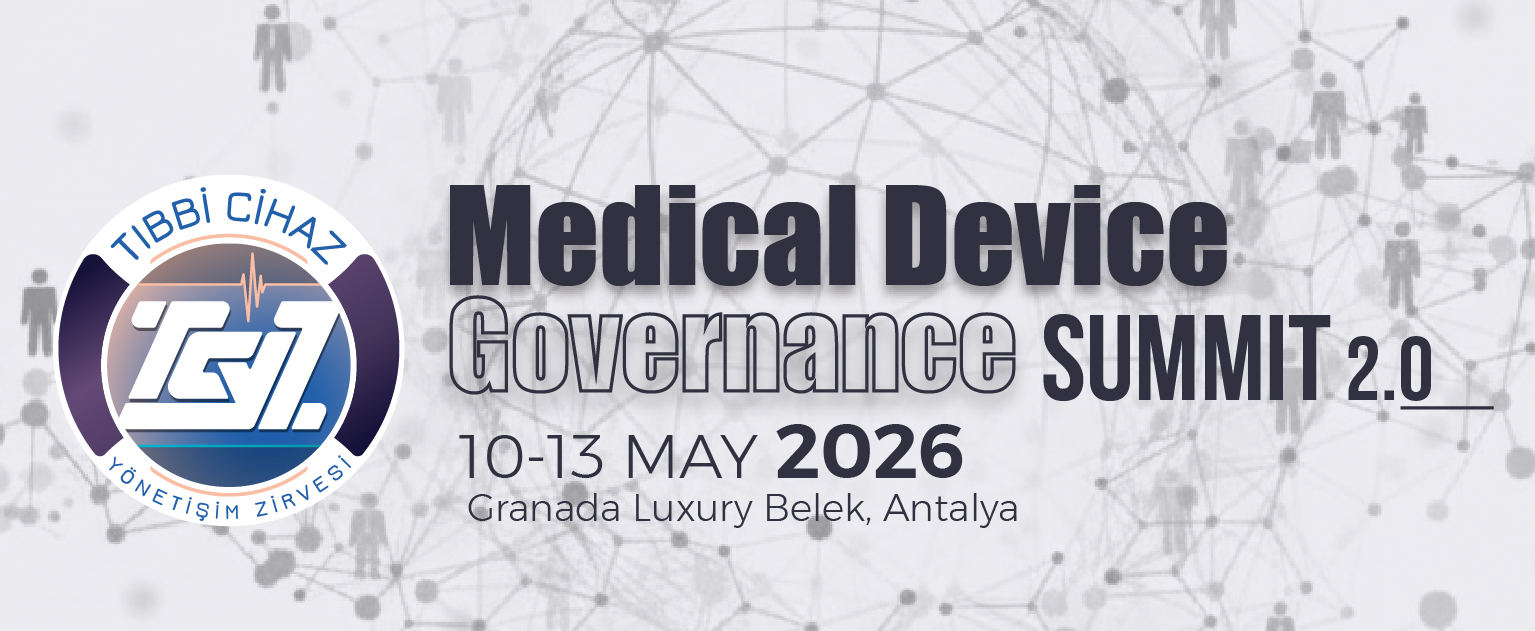
In line with the main themes defined within the scope of the Medical Device Governance Summit 2.0, preparations are ongoing regarding the content and formats of the sessions to be held with the participation of public representatives, industry stakeholders, academics, and expert speakers.
Osman BAHÇEKAPILI – T.C. Sağlık Bakanlığı KGHM Tedarik Planlama, Stok ve Lojistik Yönetimi Daire Başkan
Under each thematic area, panels, roundtable discussions, and thematic sessions are being planned to identify key challenges, develop solution proposals, and generate actionable policy outcomes.
Based on the designated thematic areas, the preparation process for the session program is currently underway, and the draft program will be shared with the public in the near future.
 |
 |
A sustainable healthcare economy is only possible with strong financial models.
The sustainability of the healthcare system and the competitiveness of the medical device sector are directly linked to accessible, predictable, and balanced financing structures. Under this theme, the core dynamics affecting the sector’s financial sustainability will be addressed through a holistic approach.
Subtopics to be Addressed:
Solution proposals aimed at strengthening the financing ecosystem through the participation of public authorities, the private sector, and financial stakeholders will be evaluated.
Financing topics will be discussed at the Collective Intelligence Platform of the Medical Device Governance Summit 2.0.
Sustainable regulation is possible through collaborative processes.
The sustainable growth of the medical device sector depends on a transparent, implementable regulatory framework aligned with international standards. Uncertainties in regulatory processes, compliance costs, and differences in implementation directly affect the sector’s competitiveness. Under this theme, the existing legislative structure and implementation processes will be evaluated from multiple perspectives.
Subtopics to be Addressed:
The objective is to develop concrete and actionable recommendations to ensure that the regulatory framework becomes a structure that guides and strengthens the sector rather than constraining it.
Regulatory topics will be discussed at the Collective Intelligence Platform of the Medical Device Governance Summit 2.0.
A healthcare industry that grows through quality and local production — not price competition — is possible.
Increasing local manufacturing in the medical device sector is not only an economic priority but also a strategic necessity. Vulnerabilities in global supply chains and rising dependency risks make it essential to strengthen domestic production capacity. This theme will address the sustainability and competitiveness of local manufacturing through a comprehensive approach.
Subtopics to be Addressed:
The objective is to develop actionable policy proposals to establish a model where local production is not only supported but systematically strengthened.
Local Manufacturing topics will be discussed at the Collective Intelligence Platform of the Medical Device Governance Summit 2.0.
Sustainable competition in global markets is possible with the right strategy.
Sustainable growth in the medical device sector requires a balanced foreign trade structure that protects local production while strengthening global integration. Import and export processes are strategic areas encompassing not only trade but also regulation, quality, access, and competition.
Under this theme, policy proposals that will strengthen the sector’s global position while supporting domestic sustainability will be addressed holistically.
Subtopics to be Addressed:
The objective is to establish a foreign trade ecosystem that supports local production, enhances competitiveness, and enables sustainable growth in global markets.
Import & Export topics will be discussed at the Collective Intelligence Platform of the Medical Device Governance Summit 2.0.
Sustainability in healthcare requires production that balances quality, access, and responsibility.
Sustainability in the medical device sector involves not only environmental responsibility but also continuity of production, supply security, preservation of domestic capacity, and long-term policy stability. A strong healthcare ecosystem is built through efficient resource use, planned production, and balanced growth.
This theme will address structural measures to enhance the sector’s long-term resilience and competitiveness.
Subtopics to be Addressed:
The objective is to establish a holistic model that strengthens economic sustainability, ensures environmental responsibility, and secures the future of the sector.
Sustainability topics will be discussed at the Collective Intelligence Platform of the Medical Device Governance Summit 2.0.
Pharmaceuticals and medical devices are complementary and inseparable components of the healthcare ecosystem.
The effectiveness of the healthcare system depends on the integrated and coordinated planning of pharmaceuticals, medical devices, and diagnostic technologies. Improving clinical outcomes, increasing cost efficiency, and ensuring patient safety depend on policy and implementation alignment between these two areas. This theme will address the intersection points and shared policy domains of the pharmaceutical and medical device sectors.
The objective is to promote an integrated planning approach in healthcare policies and support patient-centered, sustainable solutions.
Pharmaceutical and Medical Device Ecosystem topics will be discussed at the Collective Intelligence Platform of the Medical Device Governance Summit 2.0.
A strong healthcare system is built on early diagnosis.
Sustainability in healthcare depends not only on treating disease after it develops but on the capacity to manage risks through early diagnosis and preventive practices. In vitro diagnostic (IVD) technologies and laboratory infrastructure are indispensable for accurate, rapid, and reliable decision-making.
This theme will address the strategic role of diagnostic technologies in healthcare policies through a comprehensive perspective.
Subtopics to be Addressed:
The objective is to strengthen preventive healthcare models that reduce disease burden, optimize resource use, and enhance patient safety.
Diagnosis & IVD / Preventive Medicine topics will be discussed at the Collective Intelligence Platform of the Medical Device Governance Summit 2.0.
A local and sustainable healthcare ecosystem from idea to product is possible through the Producing Health Model
Reducing external dependency in healthcare, increasing high value-added production, and strengthening technological development capacity are fundamental building blocks of a sustainable healthcare ecosystem.
The “Producing Health Model” represents a comprehensive value chain extending from R&D to clinical validation, from regulation to global markets — not merely production volume.
This theme will address Türkiye’s production potential and strategic transformation areas in the medical device field.
Subtopics to be Addressed:
The objective is to develop a healthcare industry model that reduces import dependency, produces technology, has strong export capacity, and generates high added value.
The Producing Health Model will be discussed at the Collective Intelligence Platform of the Medical Device Governance Summit 2.0.
Real value in healthcare is achieved through sustainable outcomes and measurable benefit.
Healthcare systems are increasingly moving beyond cost-focused approaches toward models that prioritize patient outcomes, quality indicators, and long-term sustainability. Value-based approaches promote efficient resource use, outcome-based evaluation models, and results-based payment systems.
This theme will explore how value in healthcare can be defined and measured.
Subtopics to be Addressed:
The objective is to establish a sustainable value ecosystem that optimizes cost management together with quality and patient benefit.
Value-Based Approaches will be discussed at the Collective Intelligence Platform of the Medical Device Governance Summit 2.0.